Broken Before Their Prime: The Quiet Crisis Tearing Through America's Pro Sports Rosters
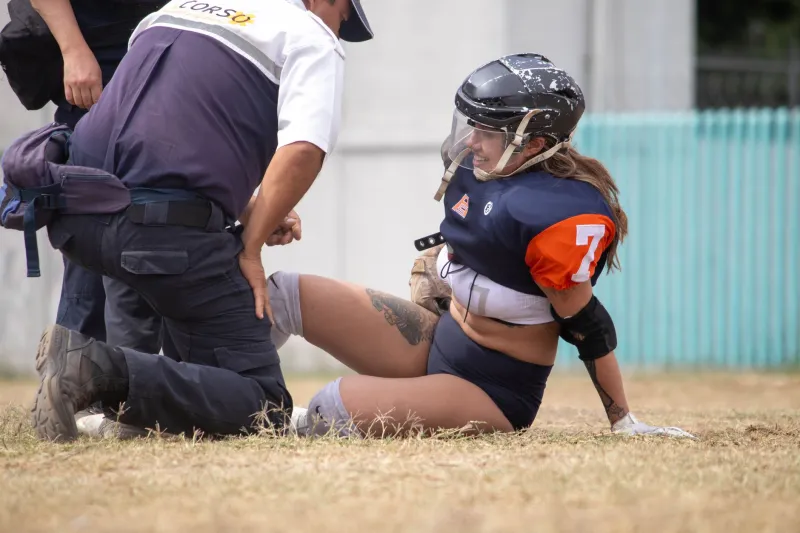
There's a moment every sports fan dreads. Your team's best player goes down in the second quarter, grabs his knee, and doesn't get up. The trainer jogs out. The crowd goes quiet. And somewhere in the back of your mind, you already know — this one's bad.
That moment is happening more often than it used to. Across the NFL, NBA, and MLB, high-profile injuries aren't just a storyline anymore. They're becoming the storyline. And the question nobody seems to have a clean answer to is: why?
The Numbers Don't Lie
Look at any recent NFL season and the injury report reads like a casualty list. ACL tears, Achilles ruptures, hamstring strains — and these aren't depth players going down. We're talking franchise quarterbacks, first-round wide receivers, and All-Pro defensive backs. The NBA isn't doing much better. Load management became a buzzword precisely because teams started recognizing that their stars were breaking down under the pressure of an 82-game regular season plus playoff runs. In MLB, Tommy John surgery has become so routine that some pitchers have had it twice before hitting 30.
A 2023 report from the Professional Football Researchers Association noted that significant injuries among starting-caliber NFL players had trended upward over the past decade. Similar patterns have emerged in basketball, where sports medicine researchers have flagged a correlation between back-to-back game schedules and soft tissue injuries.
Something is clearly off. The question is what.
Three Suspects, No Easy Answers
Game intensity and rule changes are the first place most analysts point. Today's NFL is faster and more physical at the skill positions than it was 15 years ago. Defensive backs are bigger, linebackers are quicker, and collisions happen at higher speeds. Meanwhile, rules designed to protect quarterbacks have pushed defensive pressure toward the edges of the field, creating new stress patterns on the bodies of wide receivers and defensive backs who weren't necessarily trained for that kind of exposure.
In the NBA, pace of play has accelerated dramatically. Teams are running more possessions per game, which means more sprints, more cuts, more lateral movements — all compounding over the course of a season.
Compressed offseasons are the second major factor. Collective bargaining agreements across all three major leagues have gradually shortened the windows players have to fully recover, rebuild, and prepare. In the NFL especially, the addition of a 17th regular season game didn't come with a proportional extension of the offseason. Players are being asked to do more while being given less time to recover from the previous year.
For younger players, this is especially dangerous. A 24-year-old who tears his hamstring in December and is expected to report to OTAs in late May isn't just rushing his body — he's potentially setting himself up for a more serious injury down the road.
Training methodology is the third and perhaps most debated variable. The rise of performance science has been a double-edged sword. On one hand, athletes today have access to nutrition plans, biomechanical analysis, and recovery technology that would have seemed like science fiction to players in the 1990s. On the other hand, some sports medicine professionals argue that the push for peak physical conditioning has led to athletes carrying more muscle mass than their connective tissue can reliably support — particularly in the lower body.
There's also a growing conversation about sport specialization starting at younger ages. Kids who play one sport year-round from age 10 onward are showing up to professional rosters with overuse injuries already baked in. The body simply wasn't designed to repeat the same movement patterns for 12 consecutive months across a decade of development.
What the Best Teams Are Doing Differently
Not every franchise is losing this battle. A handful of organizations across the major leagues have invested heavily in injury prevention infrastructure, and the results are starting to show up in the standings.
The Kansas City Chiefs, for instance, have been remarkably consistent at keeping key players healthy during the regular season. Their sports science staff tracks workload data obsessively, adjusting practice intensity based on accumulated fatigue rather than a fixed weekly schedule. It's less glamorous than a viral highlight, but it's the kind of marginal gain that keeps your best players on the field in January.
In the NBA, teams like the Golden State Warriors — despite their fair share of injury heartbreak — have pioneered the use of real-time biometric monitoring during games and practices. Wearable technology that tracks player movement, heart rate variability, and sleep quality is now standard in elite programs. The franchises that are winning the injury prevention game aren't just reacting to injuries; they're trying to see them coming.
In baseball, the shift toward pitcher workload management has been seismic. The days of a starter throwing 120 pitches seven times in a month are largely over for contending teams. Pitch counts, rest days, and bullpen construction are now as strategically important as lineup optimization.
What It Means for Competitive Balance
Here's where things get complicated for the average fan. When star players go down, competitive balance suffers — but not evenly. Big-market teams with deep rosters and large medical staffs can absorb injuries better than small-market franchises operating on tighter margins. A team like the Los Angeles Lakers can survive a month without one of their stars in a way that the Memphis Grizzlies simply cannot.
This creates a feedback loop that's bad for the sport. Casual fans tune in to watch the best players. When those players are on the bench in street clothes, ratings dip, arena energy drops, and the product suffers. The leagues know this, which is why commissioner offices across all three major sports have quietly begun funding research into injury trends at a level that would have seemed excessive a decade ago.
But research takes time. Rule changes take longer. And in the meantime, fans are watching their favorite athletes go down in their primes.
The Road Forward
There's no single fix here. Solving the injury epidemic in American professional sports requires a coordinated effort between team medical staffs, league offices, players' associations, and even youth sports organizations that are producing the next generation of pros.
What's clear is that the old model — push hard, play through it, rest in the offseason — isn't working anymore. The athletes are bigger, faster, and more specialized than ever. The schedules are longer. The margins are thinner. And the cost of getting it wrong isn't just a loss in the standings. It's a career — sometimes cut brutally short.
The teams that figure out how to keep their best players healthy aren't just going to win more games. They're going to define what the next era of American professional sports looks like. That's not a small thing. That's everything.