Inside the Headspace of Champions: How NFL's Smartest Coaches Are Winning with Psychology
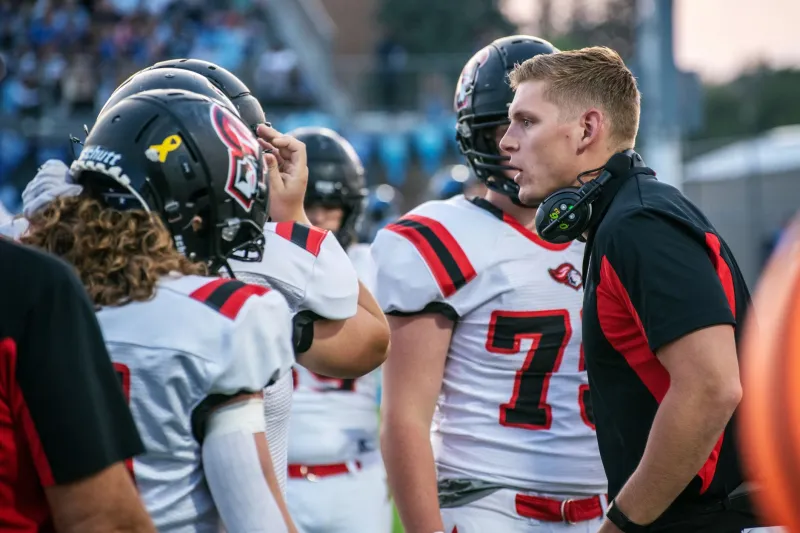
For decades, football fans have obsessed over Xs and Os — the formations, the blitzes, the red zone packages. But quietly, almost beneath the radar, a different kind of game film has been studied in NFL coaching offices across the country. It's not about coverages or route trees. It's about the human brain.
The most successful coaches in modern professional football aren't just great tacticians. They're part psychologist, part motivational architect, and part pressure-management specialist. And if you want to understand why certain teams consistently perform when the stakes are highest, you've got to start looking between the ears.
The Mind Is the Muscle Nobody Talks About
Dr. Jonathan Fader, a sports psychologist who has worked with professional athletes across multiple leagues, puts it bluntly: "Physical parity in the NFL is remarkable. The difference between a team that wins a Super Bowl and one that loses in the Wild Card round often comes down to mental infrastructure."
That infrastructure — the psychological systems built into a team's culture — is something elite coaches have been quietly constructing for years. It includes everything from how players respond to adversity, to how a team processes a bad call in the third quarter, to how a quarterback's mindset shifts in a two-minute drill.
This isn't soft stuff. It's science. And the coaches who've mastered it have the rings to prove it.
Belichick's Brain Game
Let's start with the most obvious example. Bill Belichick's Patriots dynasty wasn't built on talent alone — New England routinely won with rosters that lacked the star power of their opponents. What they had instead was a near-obsessive commitment to mental discipline.
Belichick's famous "Do Your Job" mantra isn't just a motivational slogan. It's a psychological framework. By stripping away the noise and focusing each player on their singular assignment, Belichick eliminated the cognitive overload that causes performance breakdowns under pressure. When a linebacker doesn't have to think about what the receiver is doing 40 yards away — because that's literally not his job — his decision-making becomes faster and more precise.
Sports psychologists call this "role clarity," and its impact on team cohesion is enormous. When everyone understands their function within the system, anxiety decreases and execution improves. Belichick didn't just build football teams — he built psychologically coherent units.
There's also his famous ability to exploit opponents' psychological vulnerabilities. Study his game plans against Peyton Manning's Colts in the early 2000s. He didn't just scheme against Manning's arm — he schemed against Manning's mind, forcing him into uncomfortable looks and decision trees that created hesitation. That half-second of doubt? It's all Belichick needed.
Andy Reid and the Art of Keeping It Loose
On the opposite end of the psychological spectrum sits Kansas City's Andy Reid — and yet the results are strikingly similar. While Belichick operates through structured discipline, Reid's psychological genius lies in creating an environment of creative freedom and trust.
Patrick Mahomes has spoken openly about the confidence Reid instilled in him from day one. That confidence isn't accidental. Reid deliberately structures his interactions with players to build psychological safety — a concept borrowed directly from organizational psychology — where athletes feel empowered to take risks without fear of humiliation.
"When players know their coach trusts them, they play looser," explains Dr. Leah Lagos, a performance psychologist who works with professional athletes. "And playing loose, counterintuitively, leads to tighter execution. The brain under chronic stress makes mistakes. A brain operating from a place of trust makes better decisions."
Reid's ability to stay calm and even inject humor during high-pressure moments — his sideline demeanor during the Chiefs' multiple Super Bowl runs is legendary — sends a powerful signal to his players. If Coach isn't panicking, maybe we shouldn't be either. That emotional regulation cascades through an entire roster.
Pressure Management: The New Fourth Quarter Stat
One of the most fascinating developments in sports psychology as it applies to football is the growing emphasis on what researchers call "pressure inoculation." The idea is simple: expose athletes to high-stress scenarios repeatedly in practice so that game-time pressure feels familiar rather than overwhelming.
Several NFL teams have begun working with sports psychologists to design practice environments that artificially inflate stress — crowd noise, simulated mistakes, shortened play clocks — to build mental calluses in their players. The brain, like a muscle, adapts to the stressors it faces regularly.
The San Francisco 49ers under Kyle Shanahan have reportedly incorporated mindfulness and breathing protocols into their weekly prep routine. It sounds almost too zen for a sport built on controlled violence, but the neuroscience backs it up. Controlled breathing activates the parasympathetic nervous system, lowering cortisol and improving the kind of calm, focused cognition you need when you're down seven with two minutes left.
Team Psychology: Chemistry Isn't Just a Buzzword
Beyond individual mental conditioning, the best coaches in the league are architects of team psychology — the invisible connective tissue that determines how a group of 53 individuals performs as a single organism.
Group cohesion research consistently shows that teams with high levels of interpersonal trust outperform more talented but fractured rosters. We've seen this play out in real time. For all the talent the Cleveland Browns have assembled over the years, the organizational chaos that has historically surrounded the franchise created psychological conditions where individual performance consistently underdelivered.
Conversely, look at the Philadelphia Eagles' 2017 Super Bowl run under Doug Pederson. They were backup quarterback Nick Foles leading the charge — and yet they played with a collective fearlessness that steamrolled the Patriots. That wasn't just belief. That was a coaching staff that had done the psychological groundwork all season.
What This Means for the Future of Football
The integration of sports psychology into NFL coaching isn't a trend — it's a permanent evolution of the game. Teams are hiring full-time mental performance coaches. Draft evaluations now include psychological assessments alongside 40-yard dash times. The combine might measure your vertical leap, but front offices are increasingly interested in measuring your mental leap.
For fans watching on Sunday afternoons, this adds a whole new layer to appreciate. That timeout called before a crucial field goal attempt? Icing the kicker is psychology. The way a coach handles a star player's public benching? That's team psychology management playing out in real time.
The game inside the game has always existed. The best coaches have just gotten a lot better at playing it.
So next time you're watching your team's head coach pace the sideline, clipboard in hand, remember — the most important plays they're drawing up might not involve any players at all.